Save time or money.Or nothing to pay.
We build software and automate the work slowing your business down—from finance and accounting to the systems your staff use every day.
From WhatsApp to Xero, automatically
Every Monday, a scheduled search checks the agreed WhatsApp conversations for supplier invoices and receipts, and forwards the documents it finds to a shared purchases inbox. From there, the system records the purchases in Xero and matches the payments already made from the bank to the original invoices and receipts.
A payment that can’t be tied to its paperwork stays open for Andrew to review.
What we build
Software that runs the recurring work of a business, so you can concentrate on the work your customers pay for. We call it agent infrastructure: a set of connected programs, each with one job, that pass work to each other and come to you when something needs a decision.
-
Comes in
- Marketplace settlements, fee invoices and credit notes, collected with the access you authorise
- Bank, card and wallet lines
- Supplier bills, read from the emailed PDF
- Hours submitted for payroll
- Email and website enquiries
-
Prepared
- Each settlement split into sales, fees, refunds and VAT
- Bank lines matched to invoices, bills and receipts
- Bills read and coded
- Payroll drafted from the hours
- Email sorted into what needs action and what’s for information
-
Checked
- Each bill checked by a second agent before it reaches the ledger
- Anything that doesn’t reconcile flagged for review
- Missing documents listed and followed up
-
Your decision
- Payroll, bills and filings wait for your approval
- A short brief each morning, with the decisions waiting and the deadlines coming up
- Anything that can’t wait reaches you straight away
-
On record
- Reconciled books in Xero, VAT returns and payroll
- Management reports and year-end accounts, with the working papers indexed to their records
- Source documents filed in your own Google Drive, by channel and period
Questions the records can’t answer come to one of us, so a person makes every accounting judgement.
The accounting runs on the same routine
Andrew takes responsibility for the accounting you agree with him: bookkeeping and reconciliations, payroll, VAT returns, management reports and year-end accounts, with the working papers indexed back to the records they came from.
Each settlement is split into sales, fees, refunds and VAT, so every channel’s fees and refunds show in the accounts. Your part is the decisions: approvals come to you, and nothing is filed without your approval.
We can build the system and run the work behind it: the accounting on its monthly packages, and other agreed processes for a monthly fee quoted for your business.
Waiting for your approval
-
Payroll for this weekPrepared from submitted hours and checked
-
Draft management accountsBank lines reconciled and categorised
-
Supplier billRead from the emailed PDF, coded and checked
Nothing is waiting. Everything here has been approved.
Approved by you
A possible workflow. It runs only in this page and isn’t connected to any accounts.
Work we’ve already built
Finished projects, and systems running now. Where the work was done for another business, it’s described here without naming them.
-
Supplier paperwork from WhatsApp to Xero
Every Monday, a scheduled search finds the supplier invoices and receipts shared on WhatsApp. The system then records them in Xero and matches them to the payments already made from the bank.
How it runs
- A scheduled search checks the agreed WhatsApp conversations every Monday and forwards the documents it finds to a shared purchases inbox.
- From there, the system records the purchases in Xero and matches bank payments to the original invoices and receipts, so a receipt first sent by phone can be traced through to the payment in the bank.
- The whole workflow is automatic. A payment that can’t be tied to its paperwork stays open for Andrew to review.
RunningStatus and evidence
-
Ecommerce accounting across several marketplaces
Sales from Amazon (UK and EU), eBay, TikTok Shop, Temu, Tesco, Debenhams and The Range brought into the accounts automatically, instead of being exported and keyed in channel by channel. Each settlement is broken down into sales, fees, refunds and VAT and matched to the payment in the bank, and anything that doesn’t reconcile is flagged for review.
We built the connections ourselves. There are no paid connector plugins such as A2X or Dext Commerce, and no extra connection fee from us. Any other channel is scoped before we take it on.
Documents and month-end reserves
- Andrew also built the system that collects the fee invoices, credit notes and settlement reports behind those figures, using the access each seller authorises, and files them in the seller’s Google Drive with any missing periods listed. Each platform makes its documents available differently, and gaps in older periods are followed up rather than assumed complete.
- Payouts are followed across the month end, and the settlement statements and the cash received are compared with the balance the marketplace still holds. This reserve work so far includes Amazon UK and Temu. Some of it is complete, and other channels are still under review.
Client work, runningThe reconstruction case studySettlement worksheet
-
Ecommerce accounts reconstruction
Company accounts for an ecommerce business whose records didn’t explain its year-end position, rebuilt from the evidence and filed.
What was done
- The information sat across marketplaces, settlement statements, bank and currency accounts, the ledger and stock records.
- Andrew reconciled gross trading to settlements, funds held by platforms and bank receipts, reconstructed the stock position, investigated ledger differences and made the corrections the evidence supported.
- The company accounts were filed, with supporting schedules recording the corrections and the evidence questions that remain. HMRC accepted the tax filings for processing, which is not approval of the accounting treatment.
- It’s described with the business’s permission, without naming it. Andrew went on to handle agreed payroll work for the business.
Client work, completedThe case study
-
The In Good Order CRM
Our own CRM, from the first enquiry to an agreed engagement and its recurring fees. Andrew and his sales partner each see what their role needs.
Our own system, in useMore of the interface

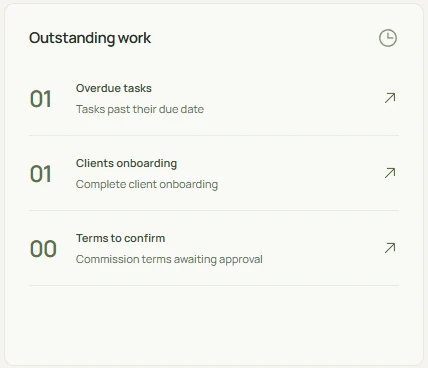
The outlined panel at full size: work waiting on someone, including commission terms awaiting approval. Fictional figures and sample records protect client confidentiality. -
A CRM built for another business
Written from scratch around the way one business runs, so its sales, operations and marketing teams work from the same customer records.
What it does
- Each role sees only what it needs.
- Commission is calculated from rules the business can change, and every payout is linked to the receipts behind it.
- It was deployed and used in that business. The business isn’t named, and there are no public screenshots.
Client work, deployedStatus and evidence
-
PlateLedger
Dealer management software for vehicle dealers, following each car from the day it’s bought to the day it’s handed over.
What it covers
- Buying vehicles into stock, then tracking preparation and repair work until each one is ready to sell.
- Customer enquiries and follow-ups, sales proposals and part exchanges.
- Deposits, invoices and credit records, including supplier credits, the vehicle handover, and a digital deal pack for each sale.
- Profit worked out per vehicle, with staff access controls setting who can see and change what.
- Backup and restore, so a dealer’s records can be recovered.
Working software, still being developedMore about PlateLedger
Made from a recreated interface and a fictional dealership. The film still shows PlateLedger’s earlier name, Forecourt. -
Bookkeeping, payroll and year-end accounts
Accounting that runs every week, and the year-end it builds towards.
What it covers
- Bank reconciliation and document matching, with each receipt attached to its transaction and anything unmatched listed for review. Recent work includes a transfer traced from one bank or currency account to the other with its fee separated out, and a part-payment recognised against an existing supplier bill with the rest left outstanding.
- Weekly payroll, from the hours submitted to a draft, an independent check, and a submission made only once it’s approved.
- Purchase bills created and matched by one agent and checked by another. These are recent and still run under close review.
- A business’s accounts rebuilt through to a completed year-end: marketplace balances reconciled, stock and goods in transit cut off at the year end, tax adjustments made, and each figure indexed to its supporting evidence. The statutory accounts and tax returns were completed and filed.

The first page of a fictional month-end pack. -
Inbox triage and a daily owner brief
Email across several inboxes sorted and routed to the person who deals with it, with a brief each day for the owner.
How it works
- Each message is sorted into action or information, and notifications are kept to what needs attention.
- We’ve also built triage for WhatsApp messages.
- The daily brief draws together open decisions, deadlines and the results from the other agents, and raises anything they couldn’t resolve.
BuiltStatus and evidence
-
Estimating and job-cost analysis
Estimates for industrial work built from quantities taken off the drawings.
What was done
- Allowances for crews, shifts, travel and consumables are built into each estimate.
- For finished jobs, what was quoted was rebuilt against what was actually spent, from the original records.
- The same work produces management packs in which each cost and margin traces back to a source document.
BuiltStatus and evidence
-
Framewright
A parametric timber-frame studio. It draws plans, sections, elevations and 3D views, works out the length of every member, and turns those into cutting schedules and buying lists. We used it to design our own extension, then built the extension from its drawings.
We made a short film about it from the same model and photographs of the build. It’s the kind of promotional video we can make from your own work.
Our own project, built and used
-
Drawn

Sheet 2 of 7, the floor joist plan
-
Cut

Every member’s length, assigned to stock boards
-
Built

The frame, built from those drawings
-
Filmed
Framewright’s own drawing and cutting list for our extension, the photograph of the frame on site, and the film made from the same model. -
-
Promotional material from ten years of records
Ten years of a business’s own email and accounting records, searched for the detail of the jobs it had done.
What came of it
- Promotional material, and a list of article subjects drawn from work the business had actually carried out.
- The records themselves stayed private.
- We’ve also written service pages and carried out technical SEO and indexing work.
Client work, completedStatus and evidence
-
Lead and tender research
Recurring searches for relevant tenders and opportunities, and a weekly pack of newly registered companies.
What it involves
- Each company in the weekly pack comes with a draft introduction, ready for someone to review before anything is sent.
- Research into available funding runs alongside.
RunningStatus and evidence
Each project with its problem, what was done and where it stands, and the first builds we’d like to make next.
Getting noticed and finding work
Most of the material is already in the business: finished jobs, photographs and drawings, and years of emails and accounts. We turn it into pages, articles and films, then make sure the enquiries they bring in are followed up.
Search and site pages
Technical SEO, so search engines can crawl and index the site properly, and service and location pages for the work you want more of.
Articles from real jobs
Written from jobs you’ve finished and the technical records behind them, so each article explains work you’ve really done.
Promotional material from your records
Job photographs, 3D models and the detail recovered from old emails and accounts, turned into case studies and promotional material. The records themselves stay private.
Product and project films
Short films made from your own models, screen recordings and photographs, like the Framewright film above.
Leads and tenders
Regular searches for relevant tenders and newly registered companies, gathered into a short pack with draft introductions. Nothing is sent until you’ve approved it.
Enquiries into the CRM
Each enquiry arrives in your CRM with a note of where it came from and a date for the follow-up.
We don’t promise rankings or a number of leads. Because each enquiry’s source is recorded, you can see what the work brought in.
How an engagement works
“Save time or money” only means something if there’s a record to check against, so we write one down before anything is built.
Look at the work
We sit with the people doing it and see where the hours and costs really go.
Agree the starting record
We write down how long that work takes and what it costs today, and you confirm it’s accurate.
Build it and run it
The software or automation runs alongside the current way of working until it has proved itself.
Check against the record
We measure the same work again. If it hasn’t saved time or money against the starting record, there’s nothing to pay. The terms of that check are agreed with you before work starts.
Who does the work
Andrew Ramsell founded In Good Order. He runs accounting and finance operations for businesses, and builds the software that takes recurring work off their teams. His background is in heavy industry and ecommerce, where he has been responsible for the numbers as well as the processes behind them.
He gets absorbed in how things work: if the numbers don’t reconcile, or a process keeps wasting someone’s time, he wants to understand why, and to build something that fixes it. The accounting he takes on runs from the monthly bookkeeping and payroll to rebuilding records and preparing the year-end accounts. Zak Dobson works with him on new business, talking to prospective clients before they meet Andrew.
About Andrew and ZakShow us what’s taking too long
The first conversation is a free review. Andrew looks at the work with you, finds a practical change, and estimates the time or money it could save, before anything is priced.
Guide prices for automation and softwareAccounting price list